
Scroll Down ▽
What If?
The Beatles were one of the most important bands of all time if not the most. We are posing and investigating what the effects would be had the band never broken up had John Lennon never died. What else would they have shown us? Who else would they have inspired and what would they then contribute to the ever evolving and unpredictable music industry?
The History
Early Days
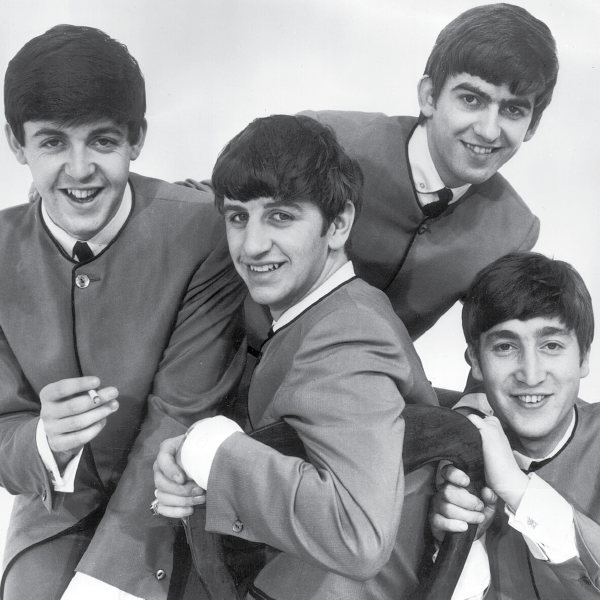
The Beatles were a British rock band formed in Liverpool in 1960, consisting of John Lennon, Paul McCartney, George Harrison, and Ringo Starr. Emerging from the vibrant skiffle and rock ‘n’ roll scene of the late 1950s, the group honed their craft in clubs across Liverpool and Hamburg before achieving massive success with their first hit single, Love Me Do, in 1962. Managed by Brian Epstein and produced by George Martin, The Beatles quickly became a cultural phenomenon. Their infectious melodies, charismatic personalities, and innovative sound sparked “Beatlemania,” a global wave of fan hysteria that marked the beginning of the so-called “British Invasion” of the U.S. music charts.
Influence
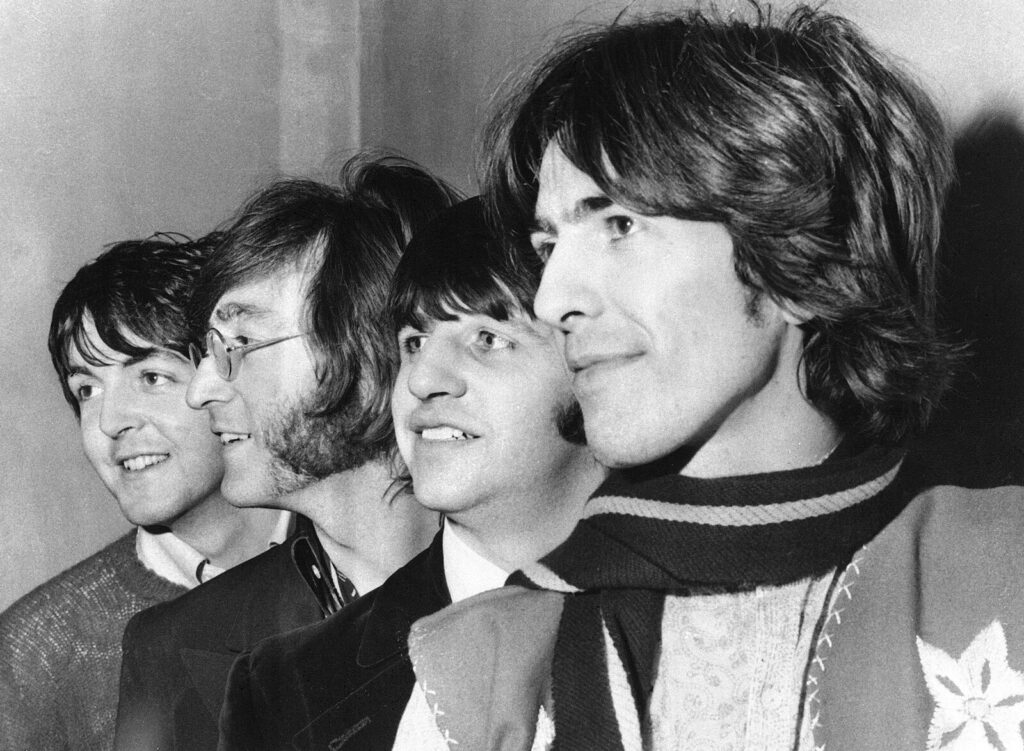
Throughout the 1960s, The Beatles continuously reinvented themselves and popular music. Albums such as Rubber Soul (1965), Revolver (1966), Sgt. Pepper’s Lonely Hearts Club Band (1967), and Abbey Road (1969) showcased their groundbreaking experimentation with studio techniques, songwriting, and genre fusion. Beyond music, they influenced fashion, film, and the broader counterculture movement of the decade. Despite their breakup in 1970, The Beatles’ impact endures their songs remain some of the most beloved and influential in music history, and their legacy continues to shape popular culture worldwide.
Solo Careers
Even after their breakup, The Beatles’ influence only grew stronger. Each member pursued a successful solo career, Paul McCartney with Wings, John Lennon with his introspective and political songs, George Harrison with his spiritually infused work, and Ringo Starr as both a musician and actor. Their collective legacy has endured through generations, inspiring artists across every genre and shaping modern music production, songwriting, and album artistry. Decades later, their songs continue to be celebrated, remastered, and rediscovered, proving that The Beatles were not just a band of their time but a lasting cultural phenomenon that redefined what popular music could be.

Our Take
1. Genre
If The Beatles had not broken up in 1970, the trajectory of popular music in the 1970s and beyond might have looked very different. As individual artists, each Beatle pursued distinct musical directions, McCartney explored melodic pop and arena rock, Lennon delved into raw, political songwriting, Harrison embraced spirituality and world music, and Starr found his niche in feel-good rock and film. Had they stayed together, these influences might have fused into a continually evolving sound that blended rock, pop, and experimentation in new ways. The band could have pioneered further innovations in recording technology and concept albums, potentially shaping the soundscape of the decade much like they did in the 1960s.


2. Lennon’s Voice
John Lennon’s survival would have also profoundly influenced not only The Beatles but global music and culture. In the 1980s, Lennon was already showing signs of artistic rejuvenation with Double Fantasy, an album that hinted at a more mature, reflective phase of his career. If he had lived, he might have reunited with McCartney and the rest of the band for collaborative projects or a full-fledged reunion, something fans and industry insiders speculated about for years. Lennon’s continued voice, often politically charged and deeply personal, could have contributed to the era’s conversations around peace, activism, and authenticity in music, perhaps challenging the emerging dominance of commercial pop and synthesizer-driven sounds.
3. A New Benchmark
A surviving and active Beatles could have changed the entire musical landscape for subsequent generations. The rise of punk, disco, and even new wave might have evolved differently if the world’s most influential band had remained an active creative force. Their potential reunions and ongoing releases would likely have set new benchmarks for artistry, and their influence might have tempered the fragmentation of rock into so many subgenres. Ultimately, had The Beatles stayed together and Lennon lived, music might have retained a stronger thread of their trademark unity, melding innovation, emotion, and mass appeal in ways that no single artist or group has ever fully replicated since.

4. The Industry
Moreover, The Beatles’ continued presence could have reshaped the way the music industry itself developed. Their influence on how albums were produced, marketed, and experienced was already immense; if they had remained together, they might have further revolutionized live performances, music videos, and the relationship between artists and technology. As pioneers of studio experimentation, they could have embraced digital recording and early computer-based production in the 1980s and 1990s, possibly blending their classic sound with emerging electronic styles. Their sustained collaboration would have served as a model for artistic longevity—showing how a band could evolve creatively without fracturing—and their ongoing global influence might have fostered a more artist-driven, rather than commercially driven, direction in mainstream music.
Your Take
We want to know what you think and what you have to say about this topic! Do you agree with us? How would things have panned out if The Beatles continued to make music? Let it all out.